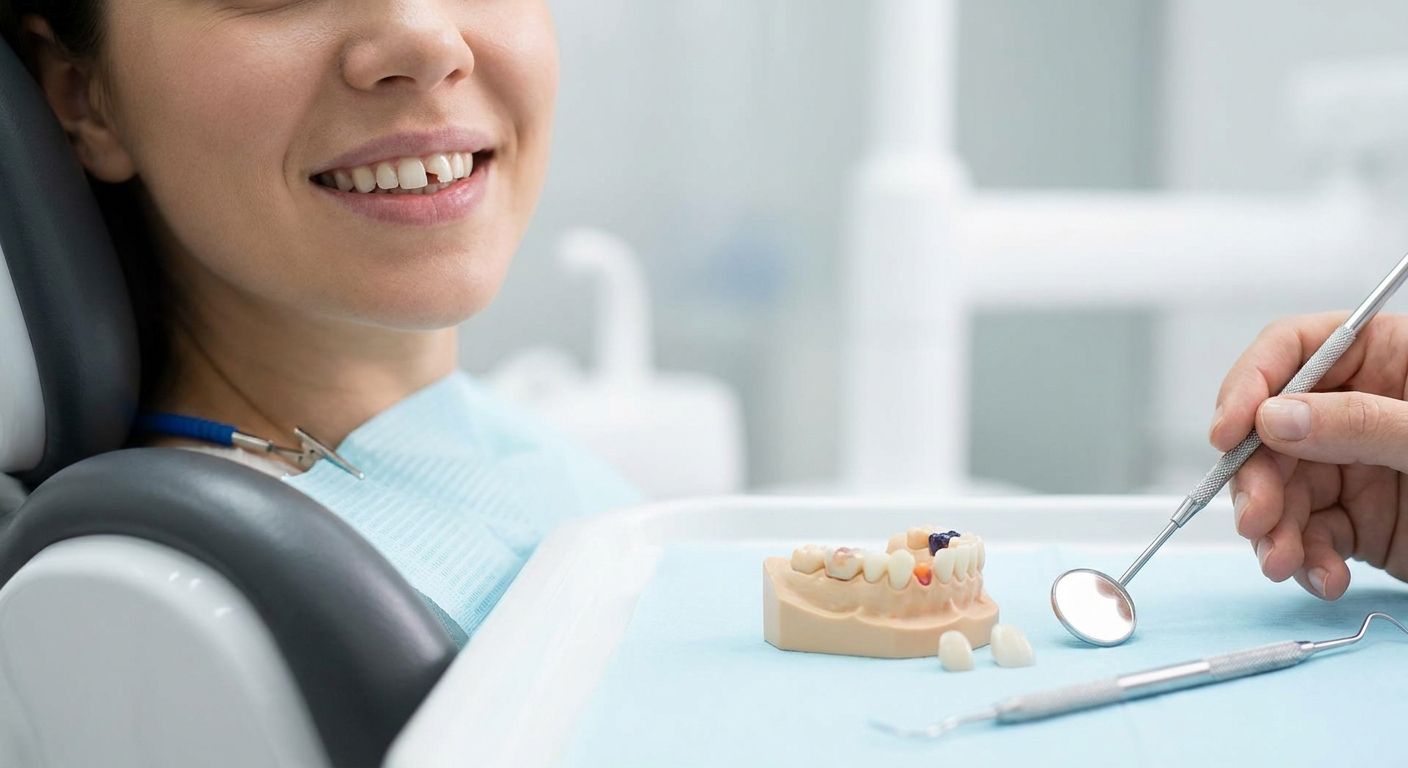
A chipped tooth needs a fix that matches how much structure you lost and where the tooth sits in your smile — not just whatever's fastest at the front desk. Best overall for most chipped teeth: dental bonding. Best for a chip on a front tooth you want to last for years: porcelain veneers. Best for a chip that exposes the nerve: root canal and crown. Best for a tooth that shattered beyond repair: extraction and dental implant.
- Dental bonding fixes a minor chip in one visit and is the most common of all options for a chipped tooth in 2026.
- Porcelain veneers cost more upfront but resist stains and hold up 10-15 years on visible front teeth.
- A chip that exposes the pink inner pulp needs a root canal and crown, not bonding.
- Enamel contouring only works for surface-level rough edges, not real structural loss.
- A tooth broken past the gumline usually means extraction and a dental implant, not repair.
Why this matters
A chipped tooth doesn't heal itself, and waiting turns a small fix into a bigger one. Exposed dentin picks up bacteria fast, and a rough edge under bite pressure tends to crack further within months, not years.
The right call depends on three things: how much tooth structure is gone, whether the nerve is exposed, and where the tooth sits in your smile. Front teeth get treated differently than molars, even for the same size chip. At Lone Mountain Dental, most chipped-tooth visits sort into one of the six options below, and the exam — not the internet — decides which one applies to you.
What makes the best option for a chipped tooth
- Matches the chip size — a hairline edge and a broken cusp are not the same repair.
- Protects the nerve — any option touching an exposed pulp has to address infection risk first.
- Holds up under bite force — front-tooth chips take different pressure than a molar.
- Blends with the surrounding teeth — shade and shape matter most on visible teeth.
- Fits your timeline — some fixes are same-day, others need two or more visits.
- Preserves natural tooth structure — the less enamel removed, the better, when it's medically appropriate.
At a glance: chipped tooth options compared
| Option | Best for | Standout feature | Key limitation |
|---|---|---|---|
| Dental bonding | Minor chips on any tooth | Same-day repair, no drilling | Less stain-resistant than porcelain over time |
| Porcelain veneers | Visible chips on front teeth | Durable, stain-resistant porcelain | Requires enamel removal, higher upfront cost |
| Dental crown | Chips involving a large piece of tooth | Full-coverage protection | Two appointments, more tooth reduction |
| Enamel contouring | Tiny surface chips or rough edges | No anesthesia, no added material | Only works on minimal chips |
| Root canal and crown | Chips exposing the nerve | Saves the natural tooth root | Longer treatment, more invasive |
| Extraction and dental implant | Teeth shattered beyond repair | Permanent, stand-alone replacement | Longest timeline, surgical step required |
1. Dental bonding: best for a minor chip you want fixed today
Dental bonding uses a tooth-colored composite resin applied directly to the chipped area, then shaped and hardened with a curing light in one visit. It's the go-to option for a chip smaller than a grain of rice on any tooth, front or back.
Dental bonding pros:
- Finished in a single appointment, usually under an hour
- No enamel removal required in most cases
- Composite resin can be shade-matched to the surrounding tooth
Dental bonding cons:
- Composite typically lasts 3 to 10 years before it needs touching up
- Picks up stains from coffee, wine, and tobacco faster than porcelain
- Not strong enough for a chip that removed a large piece of the tooth
Best for: anyone with a small, cosmetic chip who wants it handled the same day. Verdict: Book it.
2. Porcelain veneers: best for a front-tooth chip you want to last
A porcelain veneer is a thin shell bonded to the front surface of the tooth, covering the chip and reshaping the entire visible face of the tooth in the process. It's the standard fix when a chip sits on a front tooth people actually see when you smile.
Porcelain veneers pros:
- Porcelain resists staining far better than composite bonding
- Typically lasts 10 to 15 years with normal care
- Can correct minor shape or shade issues at the same time as the chip
Porcelain veneers cons:
- Requires removing a thin layer of enamel, which is not reversible
- Costs more upfront than bonding
- Usually needs two visits: prep and placement
Best for: a chip on a front tooth where you want a repair that also upgrades the smile long-term. Verdict: Book it.
3. Dental crown: best for a chip that took a large piece of the tooth
A dental crown caps the entire visible tooth above the gumline, which is necessary once a chip removes enough structure that bonding or a veneer can't support normal chewing. Crowns get used on both front teeth and molars, depending on where the damage sits.
Dental crown pros:
- Covers the whole tooth, protecting it from further cracking
- Handles chewing forces that bonding can't withstand
- Can last 10 to 15 years, sometimes longer with good care
Dental crown cons:
- Requires more tooth reduction than bonding or veneers
- Usually two appointments, with a temporary crown in between
- Overkill for a small cosmetic chip
Best for: a molar or front tooth that lost a significant chunk of structure but still has a healthy root. Verdict: Book it.
4. Enamel contouring: best for a rough edge, not a real chip
Enamel contouring — sometimes called odontoplasty — smooths a rough or jagged edge by removing a small amount of enamel with a fine instrument. It's the lightest-touch option on this list and the only one that adds nothing to the tooth.
Enamel contouring pros:
- No anesthesia or drilling into dentin required
- Finished in minutes during a routine visit
- Zero material added, so nothing to replace later
Enamel contouring cons:
- Only corrects surface-level roughness, not a real structural chip
- Enamel removed here doesn't grow back
- Won't restore length or shape lost to a bigger chip
Best for: a sharp or rough edge you can feel with your tongue but can barely see. Verdict: Book it for minor edges, skip it for anything deeper.
5. Root canal and crown: best when the chip exposes the nerve
When a chip goes deep enough to expose the pink pulp inside the tooth, a root canal removes the infected or exposed tissue before a crown seals and protects what's left. This is the option that treats pain and infection risk, not just cosmetics.
Root canal and crown pros:
- Saves the natural tooth instead of pulling it
- Root canal treatment has a widely cited success rate around 95 percent
- Crown placed afterward restores full chewing function
Root canal and crown cons:
- More invasive and longer than bonding or a standalone crown
- Usually two or more visits total
- Can involve some post-procedure sensitivity for a few days
Anxious about the procedure? Sedation dentistry options for anxious patients apply here just as much as they do for extractions.
Best for: a chip severe enough to expose the nerve or cause sharp pain when you bite down. Verdict: Book it — this one's a dental emergency, not a wait-and-see.
6. Extraction and dental implant: best for a tooth broken beyond repair
When a chip or break runs below the gumline or splits the root, the tooth usually can't be saved. Extraction followed by a dental implant replaces the entire tooth, root included, with a standalone restoration.
Extraction and implant pros:
- Solves the problem permanently instead of patching a compromised tooth
- Implant functions and looks like a natural tooth once healed
- Removes the risk of the same tooth fracturing again
Extraction and implant cons:
- Longest timeline of any option on this list, involving a healing period
- Surgical step that bonding, veneers, and crowns don't require
- Not necessary unless the tooth is truly unsalvageable
Best for: a tooth that shattered, split at the root, or broke off at the gumline. Verdict: Book it once your dentist confirms the tooth can't be saved.
Get your chipped tooth evaluated
An exam confirms which option actually fits your chip before you commit to a fix.
How this list was ranked
Each option was measured against the same six criteria: chip size it can handle, nerve protection, bite-force durability, cosmetic blend, appointment timeline, and how much natural tooth structure it preserves. No option wins on every criterion — that's the point. A chipped tooth doesn't have one best fix; it has one best fix for your specific chip.
Which option should you choose?
If you're staring at a small chip in the mirror right now with no pain, dental bonding is the reasonable default for 2026 — it's fast, it's reversible if you upgrade later, and it buys you time to decide on something more permanent. If the chip is on a front tooth and you want a fix that lasts a decade or more, move straight to porcelain veneers. Any pain, sensitivity to hot or cold, or visible pink tissue in the chip means skip the guesswork and treat it as urgent — that's root canal and crown territory, not a wait-and-see situation.
FAQ
What's the best option for a chipped tooth in 2026?
For most minor chips, dental bonding is the best option in 2026 because it's completed in a single visit and requires no enamel removal. Larger chips or chips on front teeth often call for a crown or porcelain veneer instead.
Is dental bonding or a veneer better for a chipped front tooth?
Bonding is faster and cheaper for a small chip, while a porcelain veneer lasts longer and resists stains better on a front tooth people see when you smile. Choose bonding for a quick fix and a veneer for a longer-term cosmetic upgrade.
Can a chipped tooth heal on its own?
No. Enamel does not regenerate, so a chip stays exactly as it is or gets worse under normal biting pressure. Left untreated, a small chip can crack further or expose the nerve.
How much enamel does contouring remove?
Enamel contouring removes only a small amount of surface enamel to smooth a rough edge, and it does not restore lost tooth structure. It only works on tiny surface chips, not real structural damage.
Do I need a root canal for a chipped tooth?
You need a root canal only if the chip exposed the tooth's inner pulp, which usually causes sharp pain or visible pink tissue. A surface chip that hasn't reached the nerve typically only needs bonding, a veneer, or a crown.
How long does dental bonding last on a chipped tooth?
Dental bonding typically lasts 3 to 10 years depending on location in the mouth and habits like grinding or biting nails. Front-tooth bonding tends to need touch-ups sooner than bonding on back teeth.
Is a chipped tooth a dental emergency?
It's an emergency if you have pain, sensitivity, or exposed pink tissue in the chip, and it should be treated within 24 hours. A small, painless cosmetic chip can typically wait for a normal scheduled appointment.
How do I choose between a crown and a veneer for a chipped tooth?
Choose a veneer if the chip is cosmetic and on a front tooth with enough structure left to support a thin shell. Choose a crown if the chip removed a large piece of the tooth or the tooth needs full-coverage protection.
One last thing
A chip you can't see in the mirror can still be the one that fails first — ask your dentist to check for hairline fractures with a bite test, not just a visual look, since cracks under the enamel surface don't always show up until they spread.