Choosing between endosteal, subperiosteal, All-on-4, mini, and zygomatic implants comes down to how much jawbone you have and how many teeth need replacing — this guide breaks down which type fits which mouth.
Best overall: endosteal (root-form) implants. Best for full-arch replacement: All-on-4. Best for insufficient bone without grafting: subperiosteal implants. Best for stabilizing a denture on a tight budget of healing time: mini dental implants.
- Endosteal implants remain the gold standard among types of dental implants compared in 2026 for single or multiple missing teeth with adequate bone.
- All-on-4 replaces a full arch with just four implants per jaw, avoiding the need for individual implants at every gap.
- Subperiosteal and zygomatic implants exist specifically for patients who don't have enough jawbone for standard placement.
- Mini dental implants stabilize a loose denture with a shorter healing window than standard-size implants.
- Lone Mountain Dental evaluates bone density and jaw structure before recommending any implant type.
Why this matters
Not every implant type works for every jaw. Bone density, the number of teeth you're replacing, and how much healing time you can tolerate all narrow the field before cost or aesthetics even enter the conversation.
Picking the wrong type means a failed implant, a second surgery, or months of wasted healing time. Lone Mountain Dental evaluates jaw structure with imaging before recommending a specific implant path, which is the step most comparison articles skip entirely.
This comparison walks through the five implant types patients ask about most in 2026, what each one is actually built for, and where each one falls short.
What makes the best dental implant type
- Jawbone density and height — determines whether an implant can anchor directly in bone or needs an alternative approach
- Number of teeth being replaced — a single tooth calls for a different solution than a full arch
- Healing timeline — some implants require months of osseointegration, others load faster
- Invasiveness of the procedure — grafting adds surgery time and recovery; some implant types skip it
- Long-term stability — how well the implant holds up under daily biting force over years
- Maintenance demands — how the implant interacts with your existing oral hygiene routine
Dental implant types at a glance
| Implant Type | Best For | Standout Feature | Key Limitation |
|---|---|---|---|
| Endosteal (Root-Form) | Standard bone density, single or multiple teeth | Most researched implant type with the longest track record | Needs adequate bone height to place |
| Subperiosteal | Insufficient bone, avoiding grafting | Sits on top of the jawbone instead of inside it | Less long-term outcome data than endosteal |
| All-on-4 Full-Arch | Replacing an entire arch | Fixed full-arch restoration anchored on 4 implants | Requires oral surgery and isn't reversible |
| Mini Dental Implants | Stabilizing a loose lower denture | Narrower diameter fits tighter ridges | Lower load-bearing capacity than standard size |
| Zygomatic | Severe upper jaw bone loss | Anchors into the cheekbone, not the jaw | Highly specialized, fewer surgeons trained |
1. Endosteal (root-form) implants: best for standard bone density cases
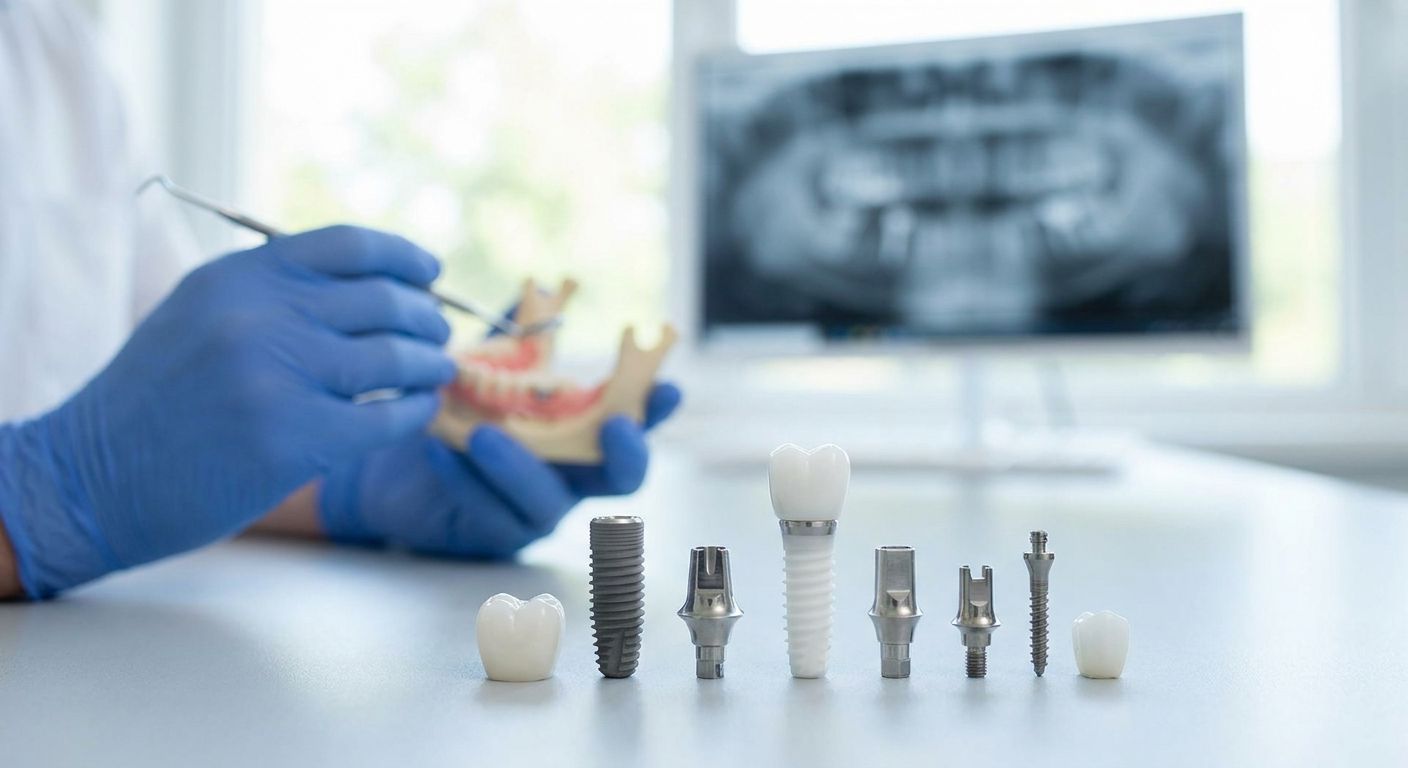
Endosteal implants are the titanium or ceramic screws placed directly into the jawbone, and they're what most people picture when they hear "dental implant." They've been used since the 1960s, which gives dentists decades of outcome data to work from.
Endosteal implants pros:
- Highest long-term success rate among all implant types
- Works for single teeth, multiple teeth, or as anchors for a bridge
- Bone integrates directly with the implant surface for a stable, permanent hold
Endosteal implants cons:
- Requires enough jawbone height and width to place without grafting
- Healing and full integration typically takes several months before a permanent crown goes on
Best for: patients with healthy jawbone replacing one or several teeth. Verdict: Recommended as the default starting point for most implant candidates in 2026.
2. Subperiosteal implants: best for patients who want to avoid bone grafting
Instead of going into the bone, a subperiosteal implant sits on top of the jawbone under the gum tissue, with a metal frame that the gum heals around. It's a fallback option for patients who don't qualify for endosteal implants and don't want a bone graft.
Subperiosteal implants pros:
- Skips the bone grafting step entirely
- Shorter overall treatment timeline than graft-plus-implant combinations
- Still provides a fixed, non-removable restoration
Subperiosteal implants cons:
- Far less common than endosteal implants, so fewer dentists have hands-on experience placing them
- Long-term success data is thinner than the decades of endosteal research
Best for: patients with insufficient bone who want to skip grafting. Verdict: Consider it when bone loss rules out endosteal implants but a graft isn't appealing.
3. All-on-4 full-arch implants: best for replacing an entire arch
All-on-4 uses four strategically angled implants per jaw to support a full arch of replacement teeth, instead of placing an individual implant under every missing tooth. It's designed for patients who are missing most or all of their teeth in one arch.
All-on-4 pros:
- Replaces a full arch with far fewer implants than a traditional approach
- Angled rear implants often avoid the need for bone grafting even with moderate bone loss
- Provides a fixed restoration rather than a removable denture
All-on-4 cons:
- Requires oral surgery and a recovery period before the final restoration is placed
- Not the right fit if you're only missing a handful of teeth in an otherwise healthy arch
Best for: patients missing most or all teeth in one jaw. Verdict: Recommended for full-arch cases where a removable denture isn't the goal.
4. Mini dental implants: best for stabilizing a loose denture
Mini implants use a smaller diameter post — often less than half the width of a standard implant — which lets them fit into narrower ridges where a standard implant won't. They're most often used to snap a lower denture into place so it stops shifting.
Mini dental implants pros:
- Fits narrow jaw ridges that can't accommodate standard-size implants
- Shorter healing window in many cases than full-size endosteal implants
- Effective, targeted fix for a loose or unstable denture
Mini dental implants cons:
- Smaller diameter means lower load-bearing capacity for chewing force
- Not typically recommended as the sole support for a full-arch fixed restoration
Best for: stabilizing a lower denture without a full implant procedure. Verdict: Consider it specifically for denture stabilization, not as a general-purpose implant.
5. Zygomatic implants: best for severe upper jaw bone loss
Zygomatic implants are longer than standard implants and anchor into the zygomatic bone — the cheekbone — rather than the upper jaw. They exist for patients who've lost so much upper jaw bone that even grafting won't create a viable foundation.
Zygomatic implants pros:
- Works in upper-jaw cases where grafting has failed or isn't an option
- Avoids months of graft healing time before implant placement
- Can support a full-arch restoration in a single surgical stage
Zygomatic implants cons:
- Highly specialized procedure with a smaller pool of trained surgeons
- Reserved for severe bone loss cases, not a general first option
Best for: severe upper jaw bone loss where grafting isn't realistic. Verdict: Ask your dentist whether you're a candidate — this is a last-resort option, not a starting point.
“If grafting has already failed or isn't realistic for your jaw, zygomatic implants are the option left on the table — not the first one to reach for.”
Find out which implant fits your jaw
Get a bone density evaluation before committing to an implant type.
How this comparison was ranked
Each implant type was ranked against the six criteria above: bone requirements, number of teeth replaced, healing timeline, invasiveness, long-term stability, and maintenance demands. Endosteal implants rank first because they satisfy the most criteria for the widest range of patients in 2026, while subperiosteal and zygomatic implants rank lower on the list because they're built for narrower, bone-loss-specific situations rather than general use.
Which dental implant type should you choose?
If your jawbone is healthy and you're replacing one or a few teeth, endosteal implants are the right starting point in 2026. Missing most or all of one arch points toward All-on-4. A loose lower denture that needs stabilizing, not replacing, is a case for mini dental implants. Insufficient bone without a graft calls for subperiosteal implants, and severe upper jaw bone loss is where zygomatic implants become the realistic option.
None of these decisions should get made from a comparison chart alone — a dentist needs to see your bone structure on imaging before confirming which type applies to your case.
FAQ
What is the most common type of dental implant?
Endosteal implants are the most common type of dental implant in 2026, placed directly into the jawbone for single or multiple missing teeth. They have the longest track record of any implant type on this list.
What's the difference between endosteal and subperiosteal implants?
Endosteal implants go into the jawbone, while subperiosteal implants sit on top of the bone under the gum tissue. Subperiosteal is typically reserved for patients who don't have enough bone for endosteal placement and want to avoid grafting.
Are All-on-4 implants better than individual implants?
All-on-4 isn't better or worse than individual implants — it solves a different problem. All-on-4 replaces a full arch with four implants, while individual endosteal implants are for replacing one or several teeth in an otherwise healthy arch.
How long do dental implants last?
Endosteal implants have decades of data showing long-term stability when properly placed and maintained. Newer implant types like zygomatic and subperiosteal have shorter track records, though early outcomes are promising.
Can I get dental implants if I have bone loss?
Yes — subperiosteal implants, zygomatic implants, and bone grafting combined with standard implants are all options for patients with bone loss. The right choice depends on how much bone remains and where.
What are mini dental implants used for?
Mini dental implants are most often used to stabilize a loose lower denture. Their smaller diameter fits narrower jaw ridges but limits how much chewing force they can support compared to standard implants.
Do zygomatic implants require bone grafting?
No — zygomatic implants anchor into the cheekbone specifically to avoid the need for bone grafting in patients with severe upper jaw bone loss. That's their main advantage over standard implants in these cases.
How do I know which implant type is right for me?
An imaging evaluation of your jawbone density and height determines which implant types you qualify for. A dentist reviews the scan alongside how many teeth need replacing before recommending a specific type.
One last thing
The implant type that gets recommended most in marketing — All-on-4 — is actually the narrowest-use option on this list. It's built specifically for full-arch cases, and pushing it on a patient missing only two or three teeth means more surgery than necessary. The right implant type is almost always the one that solves your specific bone and tooth-count situation, not the one with the most marketing behind it.
Contact Lone Mountain Dental today to schedule an evaluation and find out which implant type fits your jaw.