Choosing between nitrous oxide, oral sedation, IV sedation, and general anesthesia comes down to how severe your dental anxiety is and how long the procedure will take — this guide ranks the sedation dentistry options for anxious patients by use case so you can walk into your next appointment with a plan instead of a knot in your stomach.
- Nitrous oxide wins for mild anxiety and short visits — it wears off within minutes and you drive yourself home.
- Oral conscious sedation is the best overall pick for moderate anxiety and longer appointments in 2026.
- IV sedation fits severe anxiety or multi-step procedures because the dentist adjusts the dose in real time.
- General anesthesia is reserved for extensive oral surgery or patients who cannot tolerate any awareness during treatment.
- Behavioral guidance with topical numbing works for children and patients who want zero medication involved.
Why this matters
Dental anxiety keeps people out of the chair until a small problem turns into an emergency extraction or a root canal. Sedation dentistry closes that gap — it does not replace the dentist's skill, it just removes the fear that stops you from showing up.
The options below range from a gas mask you breathe through to full unconsciousness for surgery. Picking the wrong intensity level either leaves you white-knuckling through a filling or puts you under more sedation than the procedure actually needs. Lone Mountain Dental walks anxious patients through this decision before any drug ever touches their system, and that conversation matters more than the sedation type itself.
Best overall: Oral Conscious Sedation. Best for mild anxiety: Nitrous Oxide. Best for severe anxiety or complex procedures: IV Sedation. Best for extensive surgery or special needs: General Anesthesia. Best for children or needle-free care: Behavioral Guidance with Topical Numbing.
What makes the best sedation dentistry option
- Anxiety relief matched to fear intensity — mild nervousness and full-blown phobia need different tools.
- Recovery time — some options let you drive home in minutes, others require hours of monitored recovery.
- Monitoring and provider training — deeper sedation requires more equipment and more oversight in the room.
- Need for an escort — several options legally require someone to drive you home afterward.
- Compatibility with your medical history — medications, sleep apnea, and cardiac conditions all narrow the safe options.
- Fit for procedure length — a 20-minute filling and a three-hour implant surgery call for different sedation depths.
Sedation dentistry options at a glance
| Option | Best For | Standout Feature | Key Limitation |
|---|---|---|---|
| Nitrous Oxide | Mild anxiety, short visits | Wears off within minutes, no escort needed | Limited relief for severe phobia or long procedures |
| Oral Conscious Sedation | Moderate anxiety, longer appointments | A pill before the visit brings deep relaxation without needles | Grogginess lasts for hours; you need a driver |
| IV Sedation | Severe anxiety or complex multi-step work | Dose adjusted in real time during the procedure | Requires continuous monitoring and a recovery window |
| General Anesthesia | Extensive oral surgery or special needs patients | Complete unconsciousness for the entire procedure | Highest level of medical oversight and longest recovery |
| Behavioral Guidance + Topical Numbing | Children or patients avoiding medication | No drugs involved, no recovery downtime | Eases discomfort but does not produce deep sedation |
1. Nitrous Oxide: best sedation dentistry option for mild dental anxiety
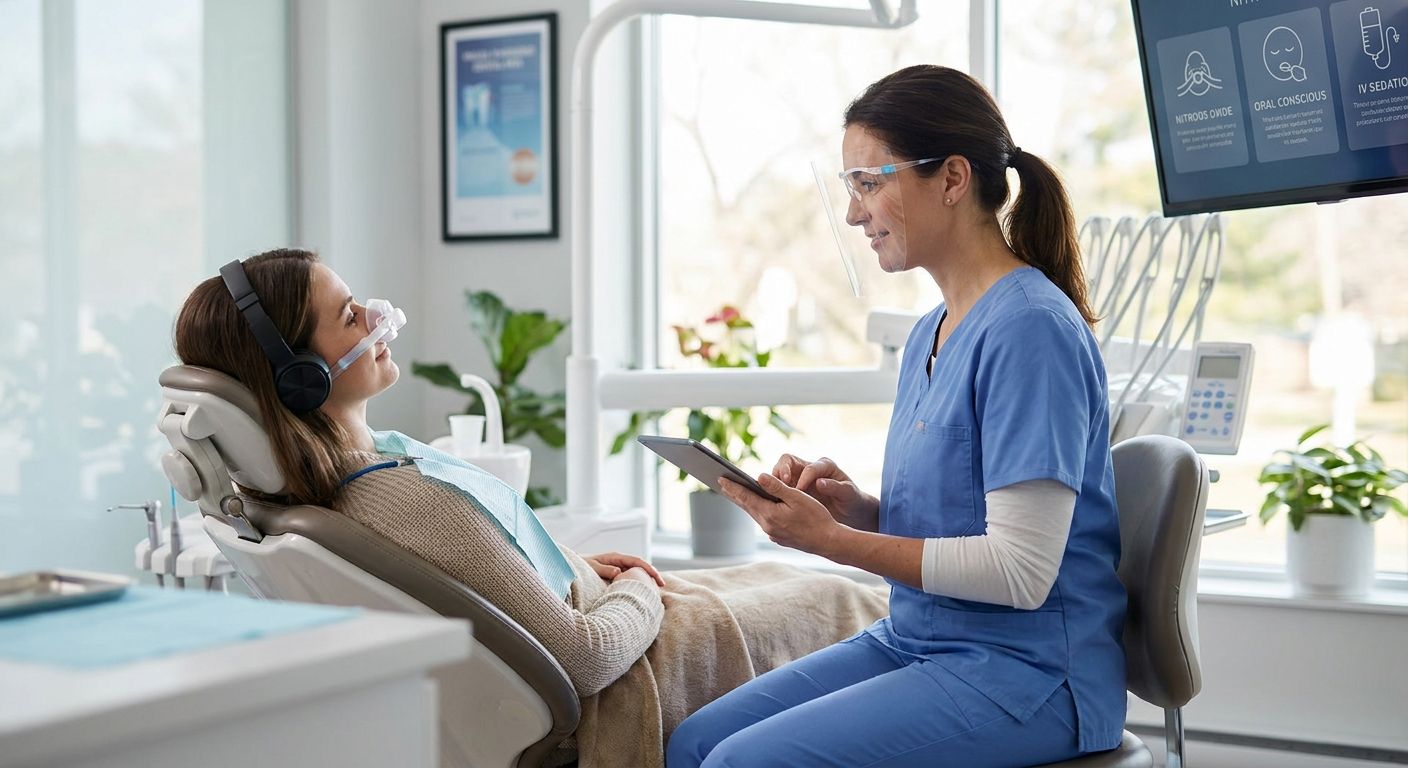
Nitrous oxide, better known as laughing gas, is inhaled through a small nasal mask and takes effect within a couple of minutes. It produces a light, floaty calm rather than sleep, and the dentist controls the concentration throughout the visit.
Nitrous oxide pros:
- Effects begin fast and wear off just as fast once the mask comes off
- No needle involved, which helps patients who fear injections more than the actual procedure
- Safe to drive yourself home afterward in most cases
Nitrous oxide cons:
- Relief is mild — it takes the edge off, it does not erase severe phobia
- Not ideal for procedures running much longer than an hour
Best for: patients with mild-to-moderate nervousness getting a filling, cleaning, or simple extraction. Verdict: Recommended for first-time sedation patients testing the waters in 2026.
2. Oral Conscious Sedation: best sedation dentistry option for moderate anxiety
Oral conscious sedation uses a prescribed pill, taken before the appointment, that leaves you awake but deeply relaxed — many patients doze through the procedure and barely remember it. It sits between nitrous oxide and IV sedation in strength.
Oral conscious sedation pros:
- No needle for the sedative itself, just a pill swallowed beforehand
- Strong enough to cover longer or more involved appointments
- Most patients report little to no memory of the procedure afterward
Oral conscious sedation cons:
- Grogginess and impaired coordination last several hours, sometimes into the next morning
- Requires a driver — you cannot operate a vehicle the same day
- Dosing has to account for weight, medical history, and any current medications
Best for: patients with moderate anxiety facing a longer appointment like multiple fillings or a crown. Verdict: Recommended as the overall pick for anxious adults in 2026.
3. IV Sedation: best sedation dentistry option for severe anxiety and complex procedures
IV sedation delivers medication directly into the bloodstream, which means the dentist can adjust the depth of sedation mid-procedure instead of committing to a fixed pill dose. Patients stay in a twilight state — responsive if spoken to, but with little memory of the visit afterward.
IV sedation pros:
- Sedation level can be increased or decreased in real time as the procedure progresses
- Works well for multi-step or lengthy procedures like several extractions in one visit
- Onset is fast since the medication bypasses the digestive system
IV sedation cons:
- Requires continuous monitoring of vital signs during the procedure
- Recovery takes longer and demands a ride home plus supervision afterward
- Not every dental office is equipped or licensed to offer it
Best for: patients with severe dental phobia or those needing extensive, multi-visit-worth of work done in a single appointment. Verdict: Consider it if nitrous oxide and oral sedation have already fallen short for you.
4. General Anesthesia: best sedation dentistry option for extensive oral surgery
General anesthesia puts you fully unconscious for the entire procedure. It is the deepest level of sedation available and typically involves an anesthesiologist or specially trained provider managing your breathing and vitals throughout.
General anesthesia pros:
- Zero awareness or memory of the procedure
- Makes extensive oral surgery, full-mouth reconstruction, or care for patients with special needs manageable in fewer visits
- Removes any risk of movement or panic disrupting a precise surgical step
General anesthesia cons:
- Carries the highest medical risk of any option on this list and requires the most oversight
- Recovery is the longest, often with grogginess lasting well past the procedure day
- Usually reserved for hospital-affiliated or oral surgery settings rather than a routine dental visit
Best for: patients undergoing extensive surgical work, or those with severe cognitive or physical conditions that make any lighter sedation impractical. Verdict: Discuss with your dentist before assuming this is the right fit — it is rarely the first option offered in 2026.
5. Behavioral Guidance + Topical Numbing: best sedation dentistry option for children and needle-free care
This is not sedation in the pharmacological sense — it pairs topical numbing gel with pacing, distraction, and clear communication to get anxious kids and needle-averse adults through routine procedures without any systemic medication.
Behavioral guidance pros:
- Zero drugs, zero recovery time, drive or walk out immediately
- Works well for children who cannot legally receive some of the deeper sedation options anyway
- No interaction risk with existing medications
Behavioral guidance cons:
- Provides comfort, not deep relief — it will not help someone with a severe phobia response
- Effectiveness depends heavily on the provider's chairside approach and the patient's willingness to engage
Best for: kids, needle-phobic patients, and anyone who wants to avoid medication for a simple cleaning or filling. Verdict: Recommended as the first thing to try for children in 2026 before escalating to nitrous oxide.
Not sure which sedation fits you
Talk through your anxiety level and procedure with the dental team before booking.
How we ranked these sedation dentistry options
Each option was placed against the six criteria above — anxiety relief, recovery time, monitoring requirements, escort needs, medical compatibility, and procedure length fit. No two options share a "best for" slot on purpose: this list is meant to work like a decision tree, not a popularity contest. The mildest, fastest-recovery option sits at the top; the most intensive, highest-oversight option sits near the bottom.
Which sedation dentistry option should you choose?
If you are unsure where to start, begin with nitrous oxide for a routine procedure — it is the lowest-risk, fastest-recovery option on this list and works for the majority of mild-to-moderate anxiety cases in 2026. If a longer appointment or deeper fear is involved, oral conscious sedation is the next reasonable step up. Save IV sedation and general anesthesia for genuinely severe phobia or surgically complex cases, and let your dentist's evaluation — not guesswork — make that call.
FAQ
What is the best sedation dentistry option for anxious patients in 2026?
Oral conscious sedation is the best overall option for most anxious adults in 2026 because it handles moderate anxiety and longer appointments without a needle. Mild anxiety cases often do fine with nitrous oxide instead.
Is nitrous oxide safer than IV sedation?
Yes, nitrous oxide carries lower risk because it requires less monitoring and wears off within minutes of removing the mask. IV sedation is stronger and better suited to severe anxiety or complex procedures, but it requires more oversight.
Can I drive myself home after sedation dentistry?
You can drive yourself home after nitrous oxide since it wears off quickly in the chair. Oral conscious sedation, IV sedation, and general anesthesia all require a driver because grogginess lasts for hours.
How much does sedation dentistry cost?
Cost depends on the sedation type, the length of the procedure, and your dental office's fee structure. Ask for a personalized quote before scheduling so there are no surprises.
What sedation dentistry option is best for children?
Behavioral guidance paired with topical numbing is usually the first choice for children because it involves no medication and no recovery time. Nitrous oxide is the next step up if a child needs more support.
Is sedation dentistry safe for patients with medical conditions?
Safety depends on the specific condition and the sedation depth chosen — this is why a dentist reviews your medical history and current medications before recommending an option. Deeper sedation like IV or general anesthesia narrows the safe pool further.
How do I know if I need IV sedation instead of oral sedation?
IV sedation makes sense when a procedure runs long, involves multiple steps, or when oral sedation alone has not been enough to manage severe anxiety in the past. It also lets the dentist adjust the dose mid-procedure, which oral sedation cannot do.
Does insurance cover sedation dentistry?
Coverage varies by plan and by the medical necessity of the sedation type, so check with your insurance provider directly. Some plans cover nitrous oxide more readily than IV sedation or general anesthesia.
One last thing
The biggest mistake anxious patients make is picking the strongest sedation option available instead of the right-sized one — more sedation means more recovery time and more monitoring, not necessarily more comfort. Start mild, tell your dentist exactly what triggers your fear, and let the 2026 sedation dentistry options above escalate only as far as your actual anxiety requires.